WL “Lee” Noble · Author
The wild child that survived.
Eldest of five, raised by a sixteen-year-old mother in a small Texas town. Twenty-year Air Force veteran. Retired Captain over a Criminal Investigations Division. For forty-three years he told almost no one where he came from.
Born: Texas, 1965 · Served: United States Air Force · Retired as: Captain, CID

Where he came from
WL "Lee" Noble was born in 1965 in a small Texas town outside a major city. He was the eldest of five children born to a sixteen-year-old mother, and his father abandoned his mother prior to Lee turning three years old.
What followed was a childhood spent playing a parental role in the household.
By the age of eight, Lee was feeding his younger brother and three sisters, trying to hold together a household fractured by violence, addiction, and long stretches of not having enough. He witnessed domestic violence involving the person he loved most, his mother. He sought the help of a local police chief who turned him away, learning early on that no one was coming to rescue them.
So he made decisions no child should ever have to make. He vowed not to remain a victim, and not to become a statistic. There were no heroes to help them, so he knew he would have to first learn to become his own hero so that, one day, he could be of service to others.
Those decisions compelled him to leave his childhood home for Anchorage, Alaska, and then into the United States Air Force. He served his country for twenty years before retiring honorably.
Upon retiring from the Air Force, Lee immediately entered law enforcement, devoting more than two decades to protecting people who could not protect themselves. He ultimately retired from law enforcement as a captain over a Criminal Investigations Division.
For forty-three years, Lee told almost no one where he came from, how, or why.
He kept his childhood trauma and experiences secret from the people beside whom he served. He remained silent partly because his mother was still living and he did not want to retraumatize her by reopening the pains of the past. He also kept quiet because, in the world in which he was raised, keeping family secrets was understood to be an act of kindness, culture, and tradition.
His mother died in 2017. Thirty days later, his younger brother died as well.
Lee realized he had become the keeper of a story that his siblings and their families deserved to know: the truth about who they were, what they had survived, and where they had come from.
The Call of the Wild Child is the result of that revelation. Speaking his truth and breaking the bonds of secrecy, culture, and tradition took a great toll.
It cost him some family relationships.
It gained him support from others, within and outside of his family.
Lee is not interested in being anyone's example of a perfect person. What he wants people to understand is much simpler:
Doing the right thing is often difficult, lonely, and unpopular, and yet it is worth doing anyway, no matter the pain of isolation and judgment.
No matter where you begin, there is always an opportunity to succeed. It is okay to extend forgiveness, even to those who hurt you most. Forgiveness can lift a burden you may not realize you have been carrying. Therefore, you can eventually learn to forgive yourself.
HIS LIFE, IN BRIEF
1965. Born in a small Texas town, eldest of five.
Age 8. Raising and protecting his siblings.
Air Force. Served twenty years, retired honorably.
23 years. Law enforcement, retired as CID Captain.
2017. His mother dies. His only brother, thirty days later.
2023. The Call Of The Wild Child is published.
A Life of Service
Two careers. One constant: a commitment to standing between harm and those who cannot protect themselves.
United States Air Force
The military gave Lee a structure that his early life had not. In uniform, the rules were clear and the consequences were real. He learned discipline not as an abstract quality but as a daily practice. When his service ended, he carried that framework with him into civilian life and into the work of law enforcement, where the same standards of accountability would prove equally necessary.
Criminal Investigations Division
As Captain over a Criminal Investigations Division, Lee's work demanded the same qualities he forged in childhood and refined in the Air Force: clarity under pressure, accountability without exception, and the willingness to confront difficult truths regardless of where they lead. The work is not procedural. It is human. And it draws on everything Lee has been since the day he made that quiet decision in a small Texas town.
Why He Wrote It
Lee did not write this book to settle scores or to perform resilience. He wrote it because silence carries its own cost. Over the course of his career in law enforcement, he had seen it in the faces of the people he served: the same damage done by the same kinds of homes. He recognized it because he had lived it. Writing the book was not a cathartic exercise. It was an act of accountability, to himself and to anyone who grew up in similar circumstances and had never seen their experience treated with honesty rather than pity.
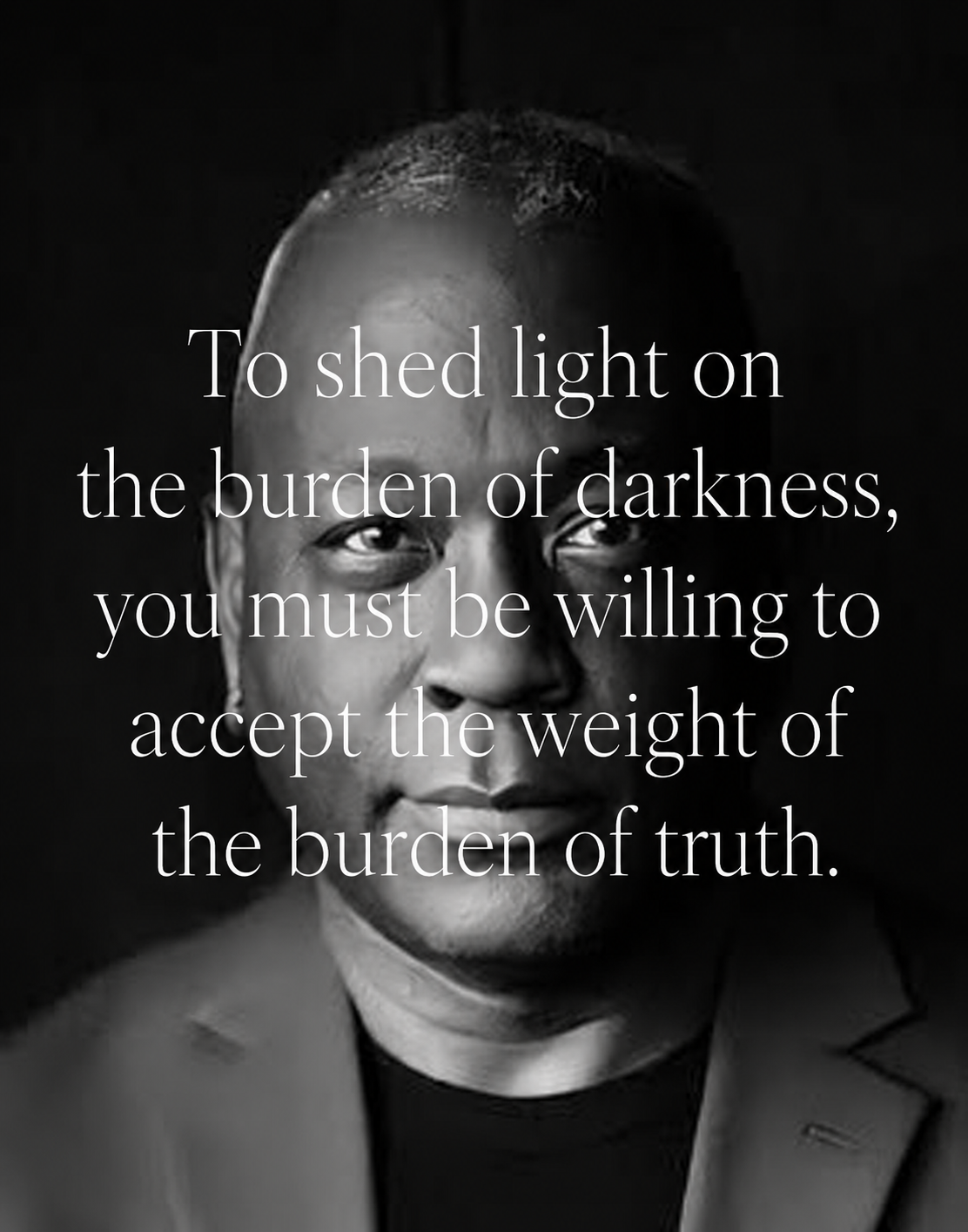
"To shed light on the burden of darkness, you must be willing to accept the weight of the burden of truth."
Lee's hope for the book is specific. Not that readers will find it inspiring in the way that word has been worn smooth by overuse. His hope is that a reader who grew up the way he did will find in it something rarer: recognition. The knowledge that someone else was in that house, made it through, and chose to tell the truth about it without softening the edges. That kind of recognition is not comfort exactly. But it is not nothing, either.